CO2 Laser vs Erbium laser - skin resurfacing
This is a subtitle for your new post

Erbium vs CO₂ Laser: Understanding the Science Behind Skin Resurfacing
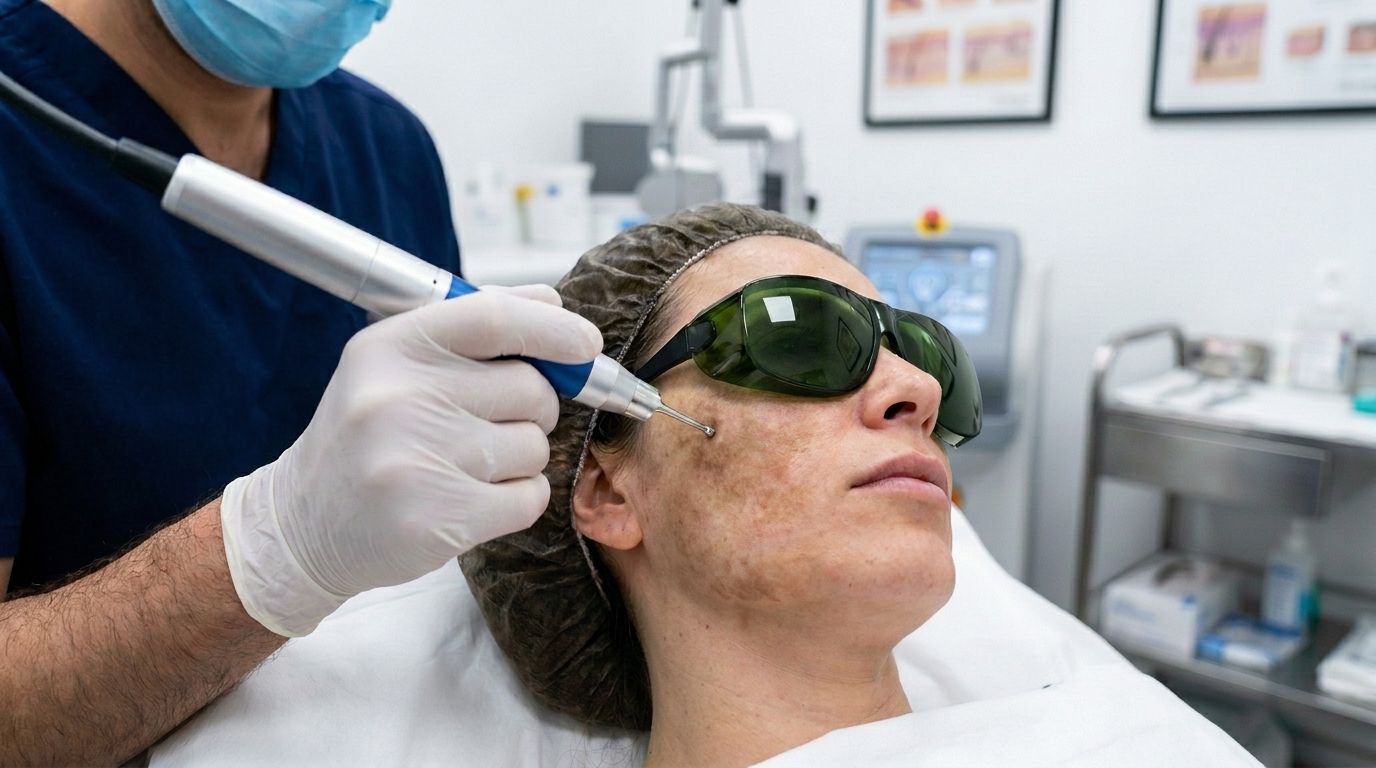
Laser resurfacing remains one of the most effective ways to improve skin texture, fine lines, acne scars, and sun damage. Two of the most commonly used ablative lasers are the CO₂ laser and the Erbium:YAG laser. While both deliver impressive results, their mechanisms and tissue interactions are slightly different — and understanding this helps explain why we choose one over the other for certain patients.
The Core Mechanism: Water Absorption
Both CO₂ and Erbium lasers work by targeting water in the skin. Because human skin is largely composed of water, these lasers use specific wavelengths that are highly absorbed by water molecules. When the laser energy is absorbed, it rapidly heats and vaporizes microscopic columns of tissue. This controlled injury stimulates collagen remodeling and new skin formation.
However, the key difference lies in how deeply and how intensely they heat the surrounding tissue.
CO₂ Laser (10,600 nm)
The CO₂ laser emits light at a wavelength of 10,600 nanometers, which is strongly absorbed by water — but not as selectively as Erbium.
What this means clinically:
- It penetrates deeper into the skin.
- It creates more thermal (heat) damage in surrounding tissue.
- It produces significant collagen contraction and tightening.
Because of this deeper thermal effect, CO₂ lasers are often preferred for:
- Deep wrinkles
- Severe sun damage
- Significant acne scarring
- Skin tightening needs
The trade-off?
More downtime and a slightly higher risk of prolonged redness or post-inflammatory pigmentation.
Downtime for CO2 laser is approximately 7-10 days.
Erbium:YAG Laser (2,940 nm)
The Erbium laser operates at 2,940 nanometers — a wavelength that is absorbed by water even more efficiently than CO₂.
What this means clinically:
- More precise, superficial ablation.
- Minimal thermal damage to surrounding tissue.
- Faster healing time.
Erbium lasers are excellent for:
- Fine lines
- Mild to moderate sun damage
- Patients wanting less downtime
- Areas requiring precision (such as delicate facial regions)
Because it produces less heat, also called "cold laser" there is typically:
- Less redness
- Faster recovery (usually 2-5 days)
- Lower risk of pigmentation issues in certain skin types
The Bottom Line
Both lasers stimulate collagen and resurface the skin by vaporizing water-containing tissue. The difference lies in thermal impact and depth.
- CO₂ = deeper penetration, more heat, more tightening, longer downtime.
- Erbium = more precise, less heat, faster healing, ideal for lighter resurfacing.
Choosing between them is not about which laser is “better,” but which is most appropriate for your skin type, concerns, and tolerance for downtime. A proper consultation with our providers at NewSkin Laser Center allows us to tailor the treatment to achieve optimal results safely and effectively.
If you’re considering laser resurfacing, understanding these differences is the first step toward making an informed decision.
At NewSkin Laser Center, we strive to provide the best treatment with vast amount of lasers we are currently utilizing. With two locations in Northridge and Simi Valley, it is easy to schedule an appointment for a consultations.